
Preserving the Physical Longevity, Clinical Excellence, and Mental Decompression of India’s Medical Fraternity.
You spend your entire life standing between your patients and mortality. You survive punishing 14-hour OPDs, sleepless 36-hour emergency room duties, rigid surgical postures that compromise your spine, and the heavy psychological weight of critical clinical decision-making.
But while you tirelessly protect the health of a nation, who is looking after yours? HealthyBodyMind is an exclusive, data-driven collaborative space designed by a clinician, for clinicians. We apply rigorous, evidence-based scientific evaluation to our own physical recovery, ergonomics, and mental decompression. It is time to defeat career-shortening musculoskeletal strain, reverse systemic burnout, and reclaim your life without compromising your practice.
Active Private Practice for 27 Years • Vetted by Over 1,200+ Indian Medical Professionals
🔒 Restricted to verified practitioners holding active MCI, DCI, or State Medical Council Registrations. No commercial spam.
Live From The Clinic
Biomechanical Integrity & Overcoming Burnout
The Silent Crisis in Indian Healthcare:
An Open Letter From Your Peer
Dear Colleague,
If you are reading this during a rare 5-minute coffee break between clinical cases, or after an exhausting evening checking up on indoor patients, I know exactly how your body feels. I know the distinct, burning ache centered right between your scapulae. I know the dull, throbbing stiffness in your lumbar spine after hours of static flexion at the operating table or dental chair. I know the micro-tremors in your wrists, the persistent eye strain from bright clinical overhead lights, and that profound, bone-deep cognitive exhaustion that sets in around 4 PM.
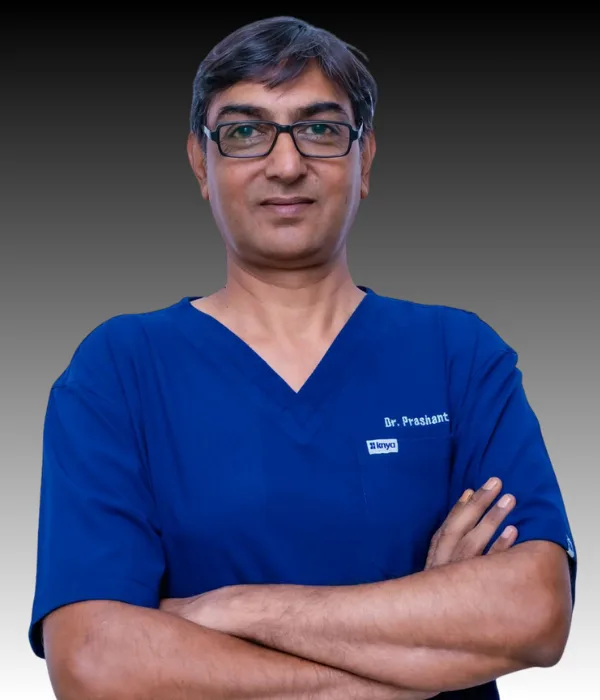
My name is Dr. Prashant Chaudhary. I have been a practicing dentist in Gurgaon for the last 27 years. Over nearly three decades on the clinic floor, I have treated thousands of patients, built a successful practice, and experienced firsthand the immense professional satisfaction that comes with healing. But I have also paid the physical tax that our profession demands.
In the Indian medical ecosystem, we are taught to be invincible. From our grueling days as NEET-PG or NEXT aspirants, through the trial-by-fire of residency, and into the relentless pace of private practice or corporate hospital consults, we are conditioned to treat our own bodies as disposable machinery. We skip meals, ignore chronic dehydration, work through musculoskeletal pain with quick over-the-counter analgesics, and carry the secondary traumatic stress of critical patient outcomes without a second thought.
The statistics are deeply concerning. Modern occupational health data indicates that over 70% of practicing clinicians and dental surgeons in India suffer from identifiable Musculoskeletal Disorders (MSDs) before reaching the age of 45. Cervical spondylosis, lumbar disc prolapse, carpal tunnel syndrome, and premature varicose veins are not just random ailments—they are occupational hazards of a medical career. Even worse is the unquantified toll of chronic sleep debt, circadian rhythm disruption from erratic night duties, and clinical burnout that robs us of our passion long before our retirement age.
I founded HealthyBodyMind because I refuse to accept that a life dedicated to healing others must require the destruction of our own health. This platform is not a lifestyle blog written by generic wellness influencers. It is a peer-to-peer clinical resource where we apply the same rigorous, evidence-based scientific evaluation to our own physical recovery, ergonomics, and mental decompression that we apply to our patients’ treatment plans.
We have saved countless lives throughout our careers. It is time we take unified action to save our own.
"The healer deserves healing. The caregiver deserves care. Welcome to your collective."
Dr. Prashant Chaudhary, BDS
Founder & Chief Coordinator, HealthyBodyMind Network
The Three Pillars of Clinician Longevity
We approach professional wellness through an objective, scientific lens. Our collective focuses on three distinct areas where modern lifestyle engineering meets clinical reality.
Pillar 1: Clinical Ergonomics & Workspace Biomechanics
Your body is your most critical clinical instrument. Whether manipulating micro-instruments under a dental loupe or standing for long surgical procedures, static posture dictates your career span. We break down the entry angles of stools, equipment placement, and rapid micro-break interventions.
- Saddle stool configuration & pelvis alignment
- Prism loupes & cervical spine protection
- Operating theatre and OPD layout design
- Localized pain-relief movement sets
Pillar 2: Shift-Work Physiology & Sleep Tech Optimization
Erratic duty transitions compromise sleep architecture and long-term metabolic health. We focus on tools and protocols to navigate circadian disruptions, looking closely at advanced orthopedic spinal alignment and strategies to achieve deep, restorative sleep within hospital environments.
- Orthopedic mattresses & structural alignment
- Duty-room acoustic & light control gear
- Melatonin regulation following night cycles
- Neurological wind-down techniques
Pillar 3: Micro-Nutrition & Cognitive Stamina Systems
Clinical focus draws heavily on energy reserves. When erratic meals cause severe blood glucose fluctuations, decision fatigue sets in. We introduce high-efficiency nutrition protocols and kitchen tools designed to maintain metabolic and cognitive performance during demanding shifts.
- Glycemic maintenance for long procedural lists
- Time-efficient, nutrient-dense meal preparation
- Countering decision fatigue & attention drop
- Adaptogens for managing systemic stress
The Biomechanical Toll of the Stethoscope and Scalpel
To understand why so many senior medical specialists in India develop chronic degenerative spinal conditions before reaching the peak of their professional careers, we must analyze the specific physics of static clinical postures. When you bend over a patient’s oral cavity, tilt your head downward to look through high-magnification surgical loupes, or lean forward over a sterile surgical field, your cervical spine experiences intense, sustained strain.
The human head weighs approximately 5 kilograms in a perfectly neutral, upright position. However, due to the laws of leverage, when you tilt your neck forward by just 45 degrees to maintain visual focus on a microscopic operative area, the effective gravitational force exerted on your cervical vertebrae increases to nearly 22 kilograms. This dramatic mechanical overload forces the trapezius, levator scapulae, and rhomboid muscles into severe, continuous contraction.
The Path from Muscle Fatigue to Radiculopathy
Over years of constant practice, this localized muscle stress causes micro-tears and restricted blood flow (ischemia). Eventually, this leads to structural cervical disc degeneration. In fields like dentistry and open surgery, this pattern frequently develops into chronic upper-back pain or radiculopathy—numbness and tingling that travels down your dominant arm into your fingers, directly threatening your fine motor precision.
The Hidden Flaw in Standard OPD and Clinical Seating
Traditional medical and office chairs feature a flat, horizontal seat pan that forces the human pelvis to tilt backward. This unnatural rotation flattens the crucial inward curve of your lower back (lumbar lordosis), creating a slouched posture that puts uneven pressure on your lower spinal discs—specifically at the critical L4-L5 and L5-S1 points.
At the same time, specialists who spend long, consecutive hours standing in the operating theatre often struggle with blood pooling in the lower legs, which causes persistent leg swelling and can lead to deep vein insufficiency or painful varicose veins. Your daily clinical schedule demands precise, controlled hand movements while your major muscle groups remain locked in fatiguing, static positions.
Evidence-Based Workspace Ergonomics
Scientific interventions designed to alter clinical biomechanics
| Equipment Category | Biomechanical Mechanism | Clinical Benefit |
|---|---|---|
| Ergonomic Saddle Stools | Maintains an open, natural 135-degree hip angle, automatically tilting the pelvis forward into its proper alignment. | Preserves natural lumbar lordosis, evenly distributing lower back pressure and eliminating chronic ache. |
| Deflection / Prism Loupes | Utilizes internal precision prisms to bend light angles, projecting the visual field straight forward to your eyes. | Completely eliminates forward neck bending, keeping your posture completely upright and strain-free. |
| Graduated Compression Socks | Applies structured, decreasing compression from the ankle upward to support internal vein valves. | Prevents lower leg fluid retention during long surgeries, lowering leg fatigue and long-term varicose vein risks. |
Within our private collective, we break down the engineering specs of these architectural adjustments, offering objective data so you can select clinical tools that truly protect your health.
Shift-Work Physiology & Sleep Tech Optimization
For a practicing medical professional, sleep is not a passive luxury—it is an active neurological and physiological rebuilding process. Yet, the systemic demands of the Indian healthcare system routinely subject clinicians to erratic 24-hour on-call shifts, sudden emergency call-outs, and rapid transitions between day and night cycles. This ongoing disruption directly interferes with your central circadian pacemaker, the suprachiasmatic nucleus.
When your circadian rhythms are constantly disrupted, your body cannot progress naturally through the essential stages of sleep. It misses out on deep slow-wave sleep, which is critical for physical muscular repair, and REM sleep, which manages your emotional processing and complex clinical decision-making capacity. The result is a steady accumulation of chronic sleep debt that elevates your systemic cortisol, spikes systemic inflammation, and leaves you vulnerable to metabolic and cardiovascular issues over time.
Orthopedic Spinal Alignment
After hours spent standing over surgical fields or bending over patient chairs, your spinal discs require a completely neutral environment to naturally absorb fluid and recover overnight. Traditional mattresses often sag, causing your pelvis to sink too deep and keeping your spine in a stressed, bent position all night. True orthopedic recovery requires multi-zone, high-density materials that adapt specifically to the heavy points of your shoulders and pelvis, ensuring your spinal column stays perfectly straight.
Hospital Duty-Room Engineering
Resting in a noisy hospital duty room during an intense overnight call requires intentional adjustments. Exposure to even tiny amounts of bright overhead hospital light quickly shuts down your body's natural melatonin production. To protect your sleep cycles, clinicians need to actively block out light using medical-grade eye contours and mask ambient clinical background noise with targeted, sound-blocking audio gear, allowing the brain to quickly enter a deep state of rest.
A Scientific Protocol for Circadian Shift Transitions
Reclaiming your physical stamina means treating your sleep schedule with the same precise, scientific approach you use for a patient treatment plan. When transitioning back from an intense night shift, managing your light exposure is your most powerful tool. Wearing specialized, orange-tinted blue-blocking glasses on your morning drive home prevents morning sunlight from tricking your brain into thinking it's time to wake up, allowing your natural sleep signals to take over smoothly.
By combining careful light management, structural orthopedic body support, and controlled bedroom temperatures, you can systematically maximize your deep sleep phases—even when your rest window is cut down to just a few short hours between heavy clinical responsibilities.
The Circadian Recovery Framework
Evidence-based protocols to optimize sleep architecture around clinical duties
| Recovery Target | Physiological Intervention | Expected Clinical Outcome |
|---|---|---|
| Post-Night Shift Sleep Induction | High-density blue-blocking eyewear worn post-shift, paired with structured room blackout environments. | Accelerates natural melatonin release, shortening the time it takes to fall asleep in daylight. |
| Spinal Column Decompression | Using responsive, variable-density orthopedic materials that hold the spine completely neutral. | Ensures optimal fluid return to spinal discs, completely relieving lower-back and neck stiffness. |
| Duty Room Micro-Rest Periods | Targeted pink-noise audio play and molded eye styling to mask sudden environment disruptions. | Maximizes restorative slow-wave sleep phases during brief 30-minute on-call break windows. |
Deep Dive: Decision Fatigue & Nutritional Stamina
How dietary choices safeguard your executive function and prevent late-day burnout.
The Cost of Choosing
Every decision you make—from responding to a critical email to picking what to wear—draws from a finite well of mental energy. This phenomenon, known as decision fatigue, progressively erodes your willpower and judgment as the day wears on.
The Nutritional Bridge
Your brain consumes roughly 20% of your body's total energy. Nutritional stamina is the practice of fueling your body with steady, slow-releasing energy sources to prevent the blood sugar crashes that accelerate executive burnout.
The Biology of Brain Drain
When glucose levels fluctuate wildly due to high-sugar or ultra-processed foods, the prefrontal cortex—the seat of logic and impulse control—is the first to suffer. By stabilizing your glycemic index, you effectively extend your window of peak cognitive performance.
"Good decision-making isn't just a psychological skill; it is a biological resource."
Actionable Strategies for High Stamina
- Prioritize Complex Carbs: Swap refined sugars for steel-cut oats, quinoa, or sweet potatoes to ensure a sustained, gradual release of glucose.
- Protect with Healthy Fats: Avocados, walnuts, and olive oil provide the structural building blocks for neural pathways and support long-term focus.
- Automate the Basics: Reduce decision fatigue by meal-prepping or establishing a fixed dietary routine, saving your cognitive capital for high-stakes choices.
Dietary Swaps for Cognitive Longevity
| Avoid (High Fatigue) | Choose (High Stamina) | The Cognitive Impact |
|---|---|---|
| Sugary Energy Drinks | Green Tea + L-Theanine | Steady alertness without the jittery crash. |
| Refined Pastries/White Bread | Sprouted Grain Toast & Eggs | Sustained amino acids and stable blood sugar. |
| Mid-afternoon Candy Bars | Dark Chocolate (85%+) & Almonds | Neuroprotective flavonoids and healthy fats. |